Hyde's letter to Jekyll
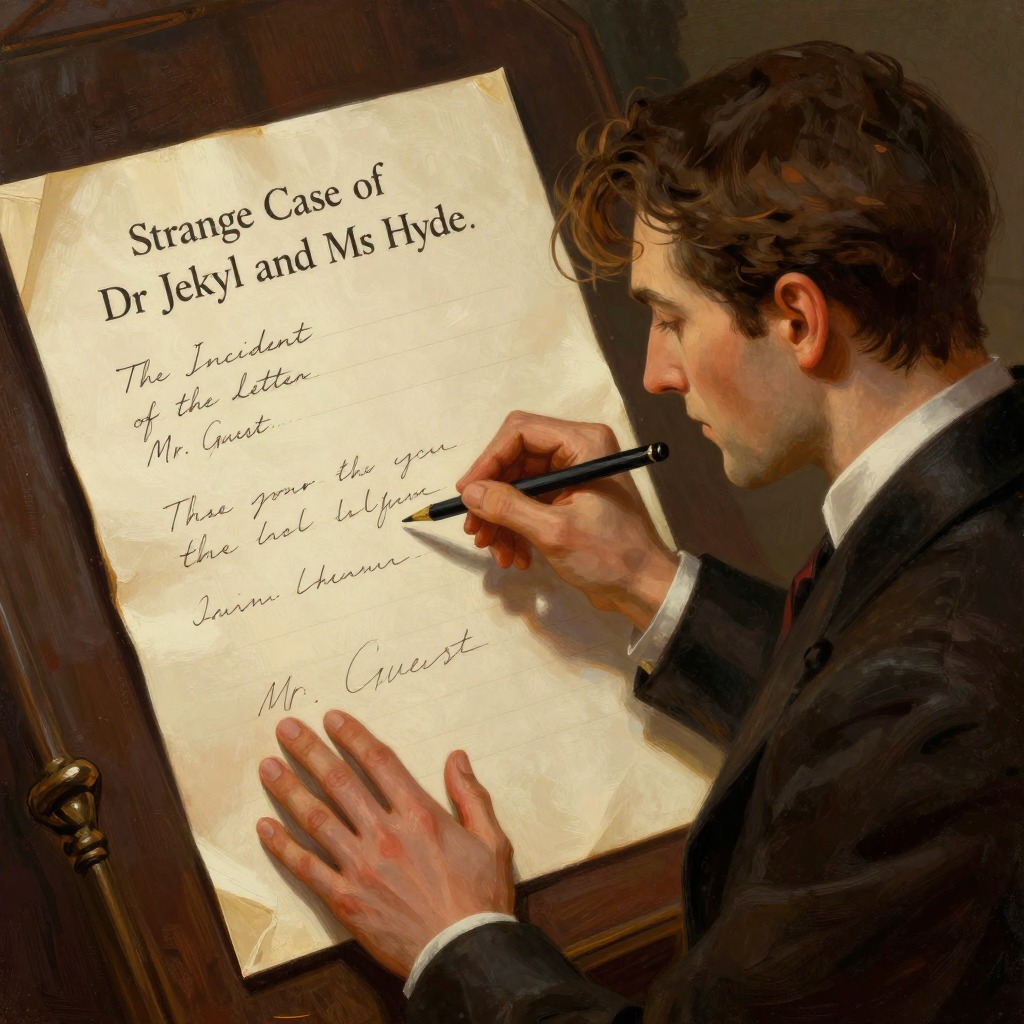
Hyde's letter to Jekyll is a short, signed note that Edward Hyde sends to Henry Jekyll in the immediate aftermath of the murder of Sir Danvers Carew. It is a document of immense narrative consequence, for it not only provides a false reassurance of safety but also, through the forensic examination of its handwriting, plants the first concrete suspicion in Mr. Utterson's mind that the relationship between Jekyll and Hyde may involve something far more sinister than blackmail or a disreputable association.
Appearance and Content
The letter is written in an odd, upright hand and signed "Edward Hyde." Its contents are brief: it signifies that the writer's benefactor, Dr. Jekyll, whom Hyde has long so unworthily repaid for a thousand generosities, need labour under no alarm for his safety, as Hyde has means of escape on which he places a sure dependence. The letter is handed in, bearing no postmark, and Jekyll admits to having burned the envelope before thinking. This detail immediately troubles Utterson, as it suggests the letter may have been delivered by hand, possibly through the laboratory door, or even written in the cabinet itself.
Utterson's Examination and the Handwriting Revelation
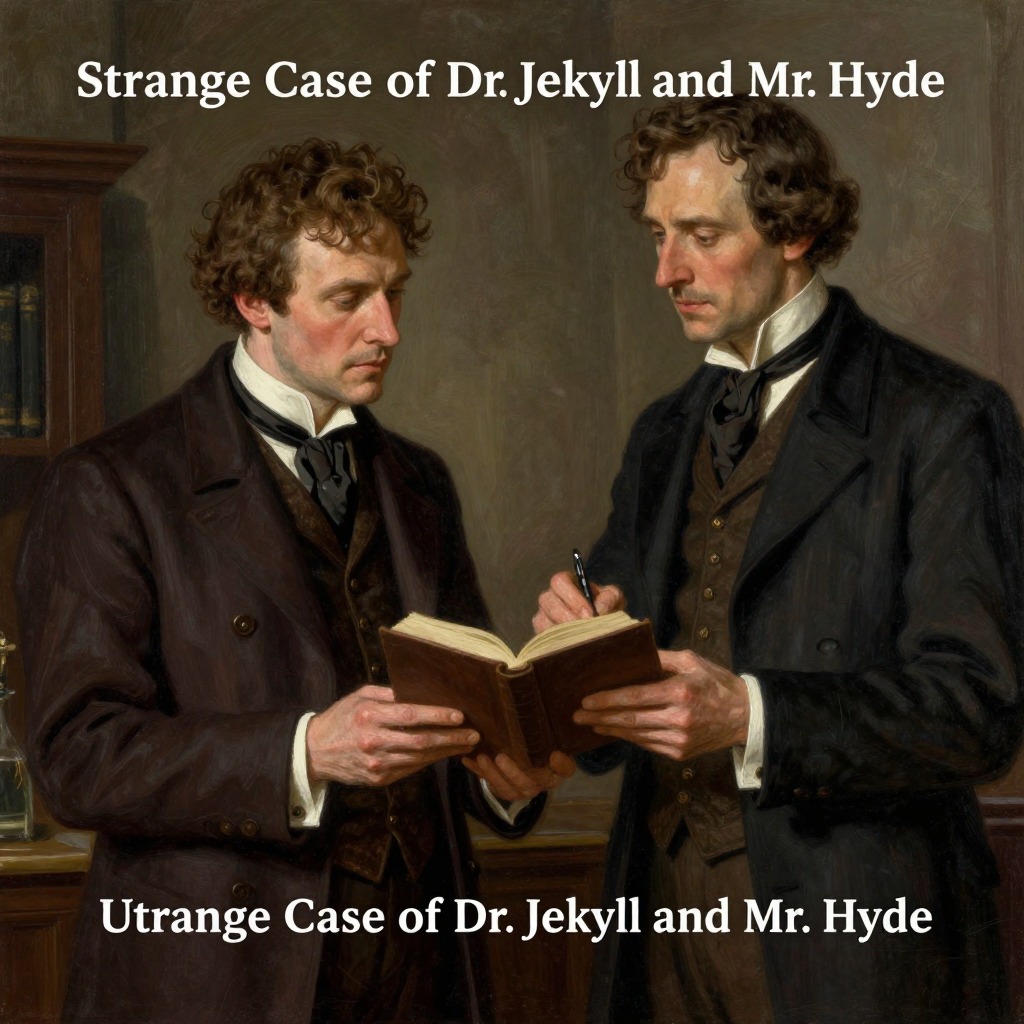
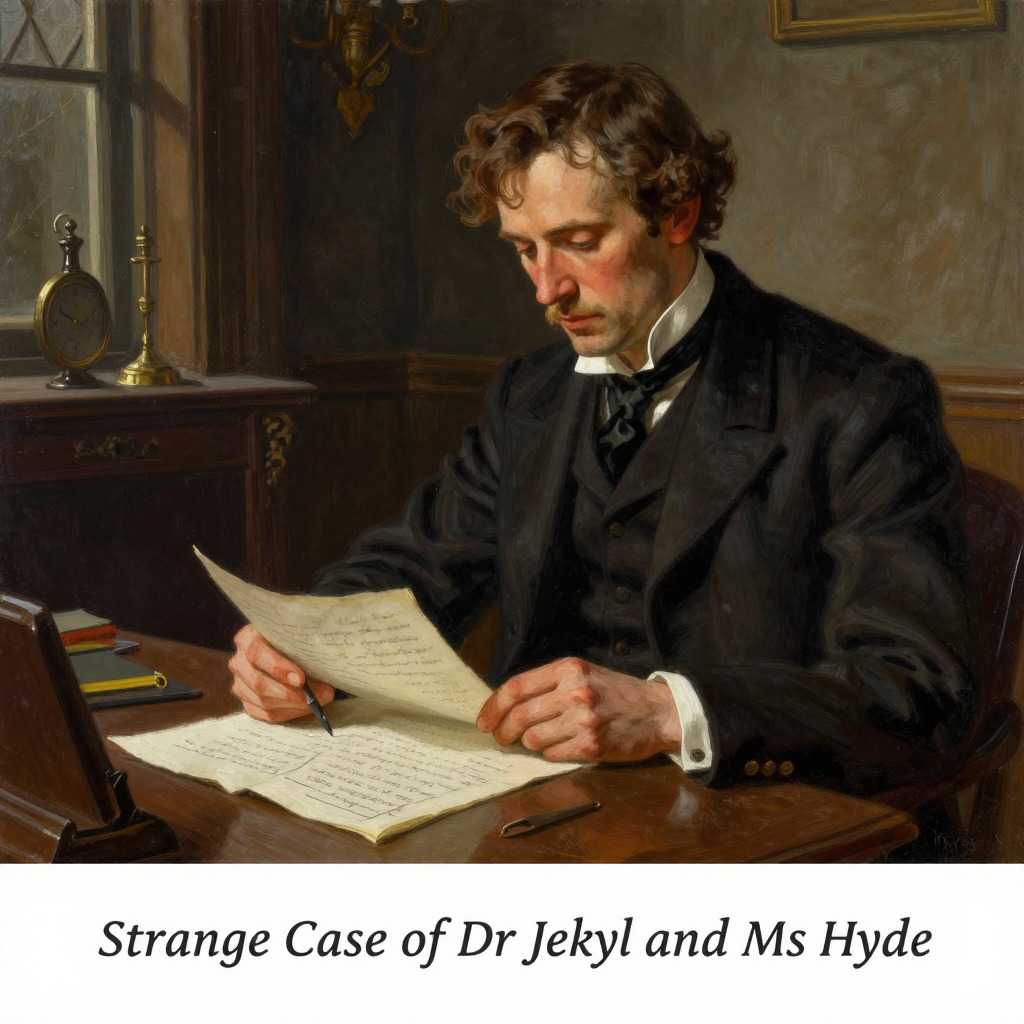
Mr. Utterson, seeking advice, shows the letter to his head clerk, Mr. Guest, a great student and critic of handwriting. Guest studies it with passion and declares the writer not mad, but the hand odd. When a separate note from Dr. Jekyll arrives—an invitation to dinner—Guest lays the two sheets of paper alongside and compares their contents. He observes a rather singular resemblance: the two hands are in many points identical, only differently sloped. Utterson, alone that night, locks the note into his safe and is struck by the horrifying implication: "Henry Jekyll forge for a murderer!" His blood runs cold.
Narrative Significance
The letter functions as a critical piece of forensic evidence within the mystery. It is the first object that directly links Jekyll to Hyde through a tangible, analyzable medium—handwriting. The revelation of the identical hands, differing only in slope, provides Utterson with a concrete, albeit deeply troubling, clue that the two men are not merely associates but are connected in a way that defies ordinary explanation. The letter's delivery method, without a postmark and via the laboratory, further deepens the mystery and reinforces the sense of a secret, hidden communication between the two figures. It is a document that, rather than clarifying the situation, introduces a new and more disturbing layer of ambiguity, pointing toward a truth that Utterson is not yet ready to fully confront.